Burnishing vs Buffing: What the Difference Means for Your Floor's Shine
Quick Answer: Burnishing uses a high-speed machine — typically 1,000 to 3,000+ RPM — spinning a soft pad fast enough to generate friction heat that melts and re-fuses the top microlayer of floor finish into a smooth, glass-like shine, without stripping away much product. Buffing runs at a much slower 175 to 350 RPM, relying on downward pressure and pad contact rather than heat to knock down light scuffs, redistribute finish, and clear away surface haze. The result from a buffer is a soft matte-to-satin sheen, not true gloss. Burnishing needs a smooth floor with enough finish already built up — VCT, terrazzo, polished concrete — while buffing works across dirtier or thinner conditions and is often the prep step before a floor is ready to burnish. Most office buildings need both tools in rotation, and running a burnisher on a floor that's down to its last coat of finish is the fastest way to scorch it.
You mop the lobby floor in your Clayton office building, wait for it to dry, and it still looks flat under the ceiling lights. Not dirty — flat. No depth, no glow, just clean-and-dull, which is somehow worse than dirty because now you know cleaning alone isn't the fix. That's usually the moment someone calls a vendor and asks about getting the shine back, and it's also the moment two different cleaning companies can walk through the same door and use "burnish" and "buff" like they mean the same thing.
They don't. One is a heat process. The other is a scrubbing process. Get them backwards on your maintenance contract and you either pay for gloss that never shows up, or you run a high-speed machine over a floor that can't handle it and end up with streaks, dull patches, or worse. For a facility or office manager juggling a dozen other line items, the terminology fight seems small — until the invoice doesn't match the floor you're standing on.
Here's what's actually happening under that machine, floor by floor, method by method.
What Actually Happens When You Burnish a Floor
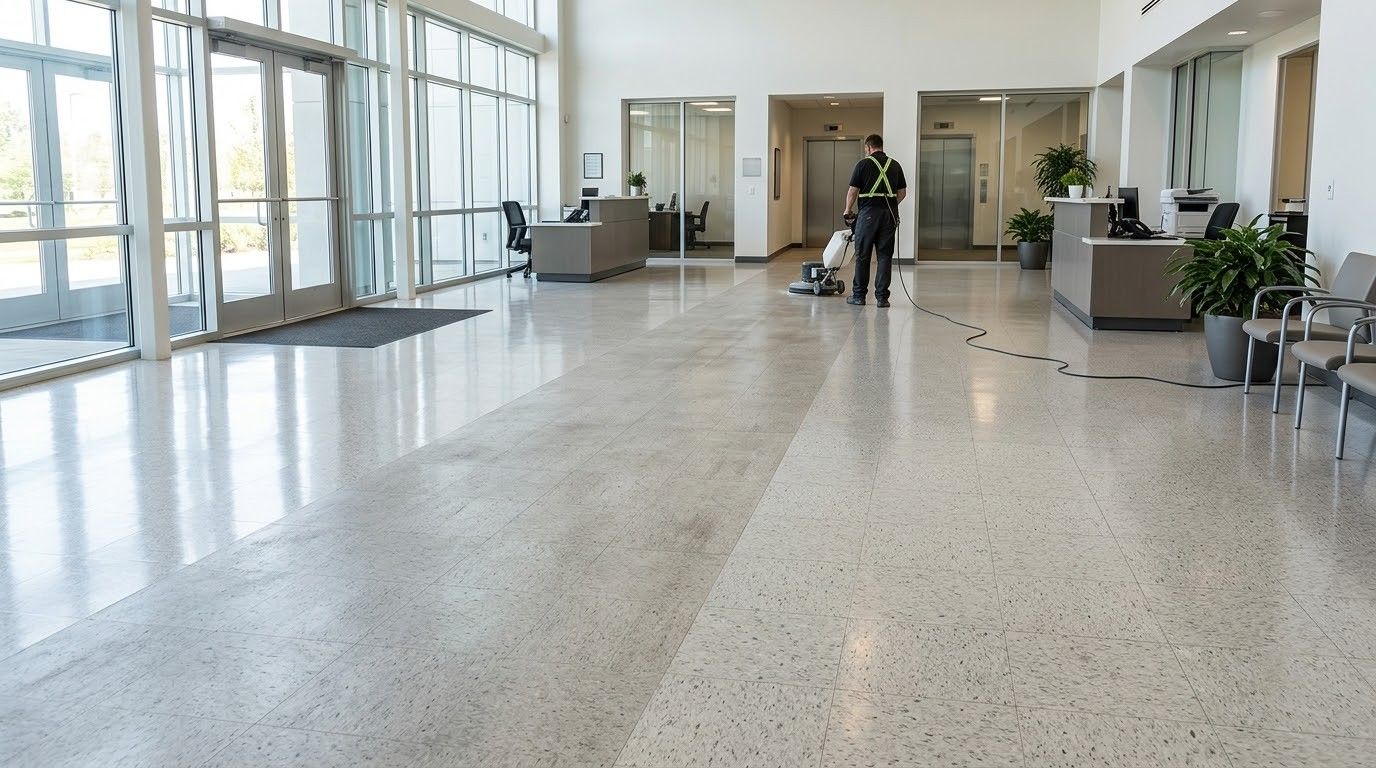
A burnisher looks like an oversized floor buffer, but the pad underneath spins at a completely different speed — commonly 1,000 to 2,500 RPM, with some high-speed models pushing past 3,000. At that rotation, friction against the finish generates real heat, enough to soften the top few microns of the acrylic or urethane coating on the floor. As the pad glides forward, it briefly liquefies that top layer, smooths out fine scratches, and lets the finish re-harden into a uniform, reflective surface.
That's the whole trick. Burnishing doesn't clean. It doesn't strip dirt, and it barely removes any finish at all — it just melts and levels what's already there. Walk into a hospital corridor or a retail showroom with that mirror-like, wet-look shine, and you're looking at a burnished floor, usually finished off with a spray buff solution or polishing cream that helps the pad glide without dragging or scorching the surface.
Because it works by heat rather than by scrubbing, a burnisher needs a floor that's already clean underneath. Run one over a floor with embedded grit or old spill residue, and you're grinding that debris into the finish instead of polishing it out. The floor has to be prepped first — dust mopped, then wet mopped or auto-scrubbed — before the high-speed pass does its job.
What Buffing Actually Does to a Worn Floor
A buffer, sometimes called a low-speed floor machine, runs at 175 to 350 RPM — roughly a tenth the speed of a burnisher. What it lacks in speed it makes up for in weight and downward pressure. Where a burnisher floats across the surface, a buffer's heavier head and slower rotation give the pad real bite, letting it scrub away scuff marks, redistribute finish that's gone uneven, and clear the light haze that builds up on a floor after a few weeks of foot traffic.
Buffing won't get you a wet-look shine. It brings a dull floor up to a soft, even sheen — closer to satin than glass — because the process is mechanical scrubbing, not heat-fusing. That makes it more forgiving. A buffer with the right pad can be used on VCT, sealed concrete, terrazzo, and even sealed wood, and it doubles as a stripping tool when fitted with a more aggressive black or brown pad ahead of a full refinish.
Most janitorial routines use buffing as the workhorse step — the pass that happens weekly or biweekly to keep a floor presentable between the deeper restoration work. It's less dramatic than burnishing. It's also far less likely to damage anything, which matters more than people think.
Tip: If a floor looks scuffed rather than just dull — actual black heel marks or cart-wheel tracks instead of an overall haze — buff it first. Burnishing glides right over embedded scuff marks without lifting them; only the slower, heavier pass of a buffer has the contact pressure to scrub them out.
Reading the Floor Before You Pick a Method
The floor itself tells you which process it needs, if you know what to look for. Run a fingernail lightly across the surface in a low-traffic corner. If it feels smooth and the finish looks continuous with no bare patches, that floor has enough product built up to take a burnisher. If you can see the tile pattern showing through thin spots, or the surface feels slightly tacky or uneven, burnishing is the wrong call until more finish goes down.
Traffic patterns matter too. An entry lobby in a Raleigh office park or a conference-room hallway in Smithfield takes a different beating than a back-office corridor that sees six people a day. High-traffic paths wear through finish fastest, which is exactly where burnishing tends to go wrong — the areas that most need shine are often the areas with the least finish left to melt.
Floor type narrows the decision further. VCT, terrazzo, and polished or densified concrete are the classic burnishing candidates because they're smooth, hard, and built to take a glossy finish. Textured tile, some LVT products, and unfinished or bare concrete don't respond the same way — there's no finish layer to fuse, so a burnisher just generates heat against bare material for no benefit. Buffing, on the other hand, tolerates a wider range of surfaces because it's not relying on melting anything.
I've walked into more than one building where the maintenance crew burnished on a fixed weekly schedule regardless of what the floor actually looked like. That's backwards. The schedule should follow the floor's condition, not the other way around.
The Real Risk of Burnishing a Thin or Worn Finish
This is where the two processes stop being a matter of preference and start being a matter of damage control. Because burnishing works by generating friction heat, a floor with plenty of finish handles that heat fine — the pad melts the top layer, the layer underneath stays protected, and the floor levels out into a shine. A floor running low on finish doesn't have that buffer. The heat has nowhere to go but straight down toward the tile.
Warning: Burnishing a floor with too little finish left can scorch or discolor the coating, leave dull "whipping" marks where the pad dragged, and in bad cases burn straight through to the tile or substrate underneath — damage that isn't fixable with another pass of the same machine. If a floor looks uneven or streaky right after burnishing instead of glossy, stop and check the finish thickness before running the machine again.
Uneven shine after a burnishing pass is almost always a finish-thickness problem, not an operator problem. A worn spot near an entrance or under a rolling chair will burnish differently than the surrounding area because there's simply less product there to react to the heat. Add more coats to bring the whole floor to an even level, then burnish — never burnish first hoping it'll even things out, because it won't. It just exposes the difference more clearly.
Building a Maintenance Schedule That Uses Both
None of this means picking one method and sticking with it. A working floor care schedule in a commercial building leans on buffing for routine upkeep and burnishing for the shine layer on top, and it rotates in periodic recoating or a full strip-and-refinish before either one is asked to do more than it can.
A typical rhythm looks something like this in an office or retail setting: buffing happens on a weekly or biweekly basis to manage scuffs and everyday wear, burnishing runs monthly or as often as weekly in high-visibility, high-traffic zones once there's enough finish built up to support it, and the floor gets a fresh coat or two of finish applied every few months depending on foot traffic — more often near entrances, break rooms, and anywhere carts or dollies roll through. Once the accumulated coats start showing wear that buffing and burnishing can't restore, it's time for a full strip and refinish rather than pushing the existing layer further.
Skipping the recoat step to save a maintenance visit is the single most common reason burnishing starts causing the exact problems it's supposed to prevent. The finish thins out gradually, the shine gets harder to bring back with each burnishing pass, and eventually the floor is either dull no matter what you do or actively getting damaged every time the machine runs. A facility manager who tracks finish condition — not just how the floor looks that week — avoids that spiral entirely.
Frequently Asked Questions
Can I just burnish more often instead of recoating the floor?
No. Burnishing melts and levels the finish already present; it never adds material. Recoating regularly is what lets you burnish safely and hold shine, while extra passes on one coat wear it out faster.
Does burnishing work on carpet or LVT?
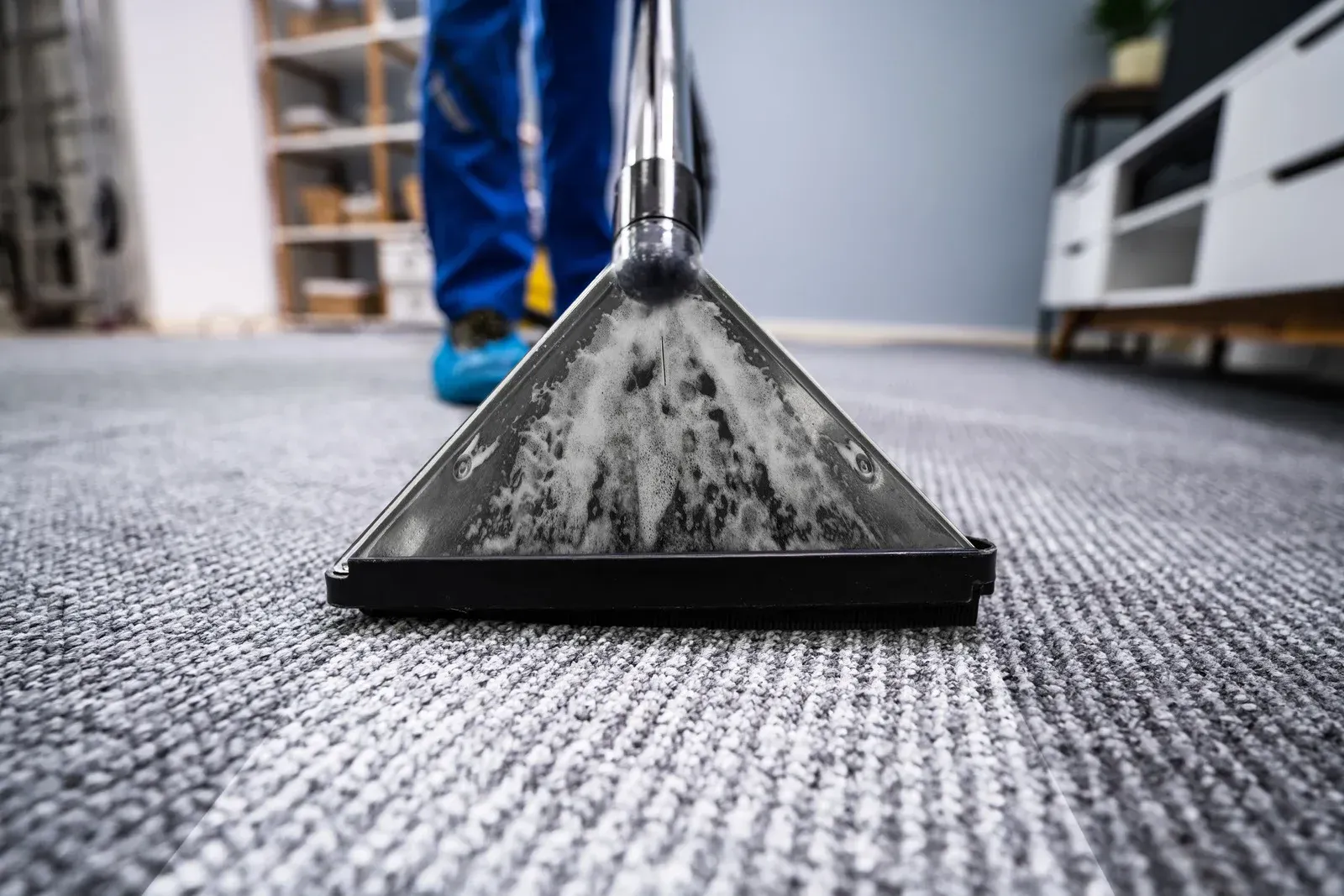
Not really. Burnishing suits hard, finished surfaces like VCT, terrazzo, and polished concrete. LVT sometimes takes light buffing but rarely handles high-speed burnishing well, and carpet requires a completely different set of cleaning equipment altogether.
Why does my floor look duller after burnishing instead of shinier?
That usually signals thin or uneven finish, a loaded or worn-out pad, or dirt left before the pass. Check finish thickness first, because a burnisher cannot build shine from a coating that isn't there.
How often should an office building burnish its lobby floor?
Traffic and finish condition matter more than any fixed calendar. A busy entryway in a Garner or Fuquay-Varina office might need weekly burnishing, while a quiet back hallway often stays fine with monthly attention.
Is buffing enough to keep a floor looking good without ever burnishing?
For lower-traffic areas, sometimes yes. Buffing alone keeps a floor clean and evenly sheened. High-visibility spaces like lobbies and reception desks, though, usually need the higher gloss that only burnishing can produce.
What pad should be used for each process?
Burnishing pads run lighter and less abrasive, built to generate heat without cutting finish. Buffing pads vary by job, softer for scuffs and harder for stripping, and the wrong choice undoes your work.
Can burnishing damage terrazzo or polished concrete the same way it damages VCT?
Yes, whenever the finish or sealer on top runs too thin. The mechanism stays identical across substrates, since heat needs a protective layer and a bare surface absorbs it directly.
Do all commercial cleaning companies burnish and buff the same way?
No. Technique, pad selection, and how carefully a crew checks finish condition before burnishing vary widely between vendors, which explains why two companies can give one facility manager completely conflicting floor advice.
Knowing Which Method Your Floor Actually Needs
The difference between burnishing and buffing comes down to heat versus pressure, and reading your floor correctly before either machine runs is what separates a lasting shine from a scorched coating. A buffer redistributes finish and lifts scuffs at low speed, while a burnisher fuses the top layer into gloss only when enough product sits underneath. Matching the method to the floor's actual condition, rather than a fixed calendar, keeps the surface both protected and genuinely presentable week after week.
Serving Clayton, Raleigh, Smithfield, Garner, and the surrounding areas, JoCo Office & Floor Cleaning LLC
has spent 20
years learning to read finish thickness and traffic wear before choosing a machine. That habit is what keeps a floor from thinning out too quickly or going dull under the lobby lights. When buffing, burnishing, and recoating each happen at the right moment, a commercial floor holds its depth through heavy seasons, and the building it belongs to quietly reads as well run.