How Often Should High Traffic Office Floors Be Stripped and Rewaxed?
Quick Answer: Most commercial hard floors need a full strip and rewax every 6 to 12 months, but a busy lobby, main hallway, or break room corridor often needs it every 3 to 6 months, while a quiet private office can go closer to a year. The calendar matters less than the floor itself. When the finish looks cloudy, black scuffs return right after buffing, and mopping no longer restores shine, the finish has reached the end of its life. Between full strips, routine buffing and a scrub and recoat keep the finish healthy so the strip can happen on your schedule instead of in an emergency.
You walk through the front entrance of your building on a Monday morning and notice the floor looks tired. It was fine a few weeks ago. Now the lane from the door to the reception desk looks gray, the corners look darker than the middle, and the shine you remember has gone flat. Your cleaning crew is still mopping every night, so you wonder whether the floor needs more attention, or whether it simply needs a different kind of attention.
That question comes up for almost every property manager and office manager who looks after vinyl composition tile or other finished hard floors. Someone tells you to strip and wax once a year. Someone else says twice a year. A vendor mentions quarterly. Nobody explains why the answers are so different, and you are left guessing at a schedule for a surface that takes a beating every single day.
The honest answer is that there is no single number. The right interval depends on how many people cross the floor, what they carry in on their shoes, and how the finish is maintained between full strips. Once you understand those three things, you can build a schedule that fits your building instead of a generic one.
Why Floor Finish Wears Out
A finished hard floor is really two layers. The tile or flooring is the base, and on top of it sits a thin protective coat of floor finish, which is built up from several thin coats. That finish is the part that takes the abuse. Shoes grind grit into it, rolling chairs scratch it, and cleaning chemicals slowly soften it. Its job is to sacrifice itself so the tile underneath stays protected.
Over time, the finish does three things that you can see. It scuffs and scratches until light no longer reflects evenly, so the floor looks dull. It traps fine dirt in those scratches, so the floor looks gray even right after mopping. And with repeated recoating, it layers up and can begin to amber or turn cloudy. None of this means your crew is doing a poor job. It is simply what a protective coating does when thousands of footsteps land on it.
That is why the question is never really about the calendar. It is about how fast your particular floor consumes its finish, and whether you are replacing it before the tile itself is exposed.
Match the Schedule to the Traffic Zone
The most useful change you can make is to stop treating your whole building as one floor. A single office suite usually contains zones that wear at very different rates, and each one deserves its own interval.
The heavy zones are the main entrance, the lobby, the reception lane, the landing outside the lifts, the corridor that leads to restrooms, and any hallway that connects the parking lot to the break room. These areas often need a full strip and rewax every 3 to 6 months. Grit arrives here first, and the finish in the walking lane can be worn thin while the edges still look fine.
The middle zones are open work areas, conference room approaches, and shared copy rooms. A full strip every 6 to 12 months is a sensible range, with buffing in between to keep the sheen even.
The light zones are private offices, storage rooms, and closets. These can often go a year or more between full strips, since a handful of people walking in and out does very little to the finish.
When you map your building this way, you usually find that only a small portion of the floor drives the schedule. That is good news, because it means you can focus attention where the wear is instead of refinishing everything at the same pace.
Tip: Walk your floor once with the lights off and a flashlight held low to the ground. Wear patterns, haze, and thin spots show up clearly in raking light, and you can mark which zones are overdue before anyone even touches a machine.
The Signs Your Floor Is Overdue
A calendar gives you a starting point, but the floor tells you the truth. Watch for these signals, especially in your busiest areas.
The finish looks cloudy or hazy even right after cleaning. When light scatters instead of reflecting, the surface coat is damaged or built up beyond what cleaning can fix.
Black scuff marks keep coming back. A fresh buffing pass should lift most heel marks. If they return within days, the finish is too soft or too worn to hold up.
The shine is uneven. A glossy edge with a dull walking lane is one of the clearest signs that the traffic path has worn through its finish.
Mopping no longer improves the look. If a clean floor still looks dirty, the dirt is trapped in the finish itself, not sitting on top of it.
Buffing and burnishing stop restoring gloss. These processes polish existing finish. When there is nothing healthy left to polish, they only run over the problem.
You can see the tile or its pattern showing through. This is the last warning sign. Once the finish is gone in a lane, the tile is taking the wear directly, and that wear is much harder to reverse.
If you see two or more of these in a heavy zone, it is time to schedule the strip, whatever the calendar says.
Strip and Rewax Versus Scrub and Recoat
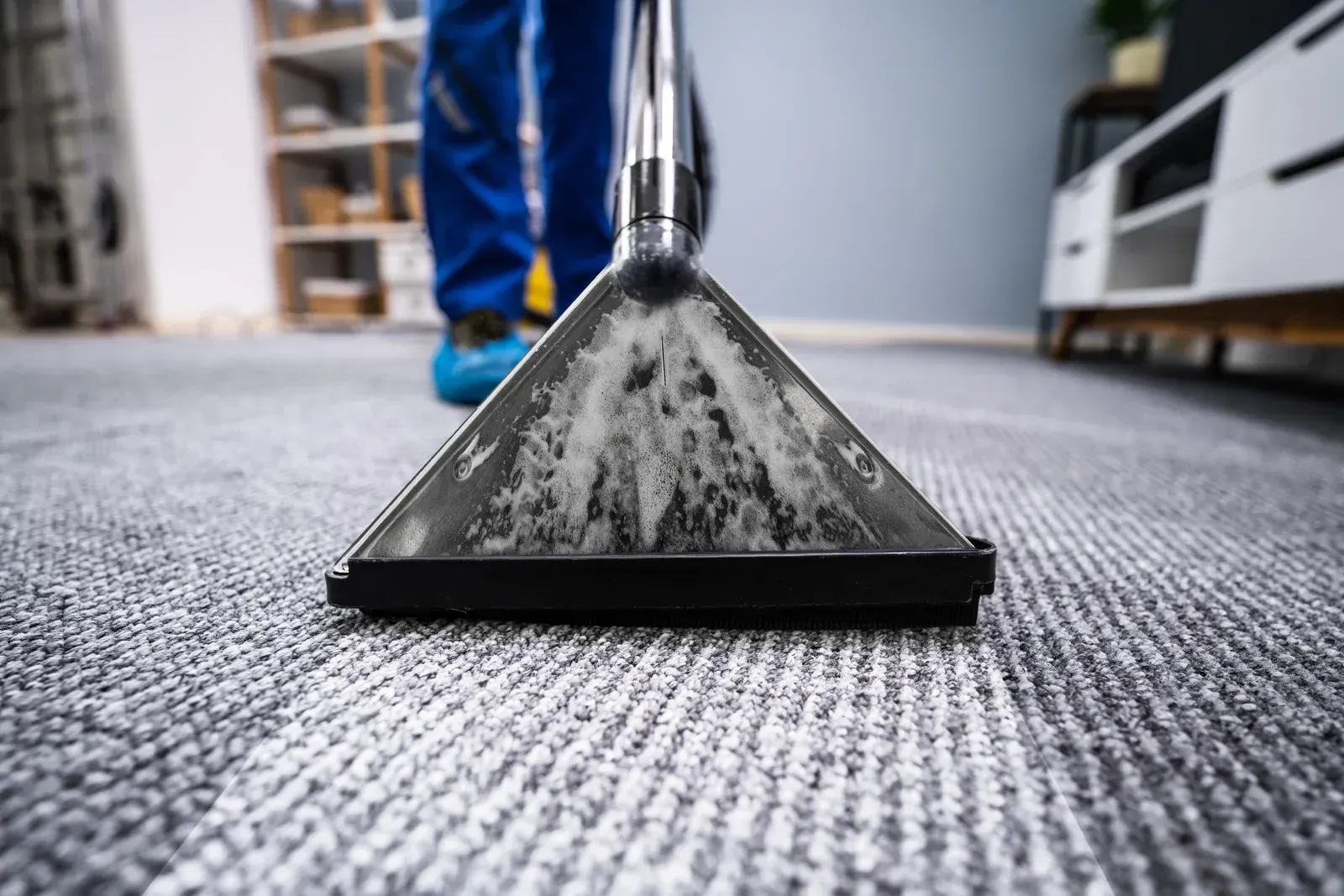
Not every refresh has to be a full strip. A scrub and recoat removes the top layer of finish along with embedded dirt, then adds fresh coats over the layer that remains. It is faster, uses less downtime, and works well when the base finish is still sound.
A full strip removes every layer down to the bare tile, and then rebuilds the finish from scratch with several thin coats. It takes longer and needs the area closed off while it cures, but it is the only way to reset a floor that has built up too many layers or started to yellow.
A good rhythm in a busy building mixes the two. You might scrub and recoat the lobby and main corridor a couple of times between full strips, and then strip those areas completely once the finish has had a full life cycle. That keeps the shine strong without removing more finish than you need to, and it gives you a reason to look closely at the floor at regular intervals.
What you want to avoid is recoating over and over without ever stripping. Each new coat sits on top of old finish that is already holding dirt, and the floor slowly turns thick, cloudy, and yellow. A planned strip is what clears that cycle.
Warning: Do not add another coat of finish over a floor that already looks hazy or yellow. New finish bonds to whatever is underneath it, so a coat laid over trapped dirt and buildup locks that dirt in and makes the cloudiness harder to remove later.
What Happens Between Strips
How long a finish lasts has a lot to do with what happens on the days when nobody is refinishing anything. The strongest schedule in the world fails if daily care works against it.
Dust mopping is the biggest factor. Fine grit acts like sandpaper under every shoe, and removing it before it is ground into the finish does more for the shine than any product. In a busy entryway, daily dust mopping is worth the effort.
Walk off mats at every outside door catch a large share of the grit before it reaches the floor. Mats near the lobby entrance and the parking lot access points do quiet, constant work. Keep them clean, because a loaded mat stops trapping anything.
Neutral cleaners protect the finish. Harsh or overly strong chemicals dull the surface faster, and leftover residue attracts dirt. A neutral cleaner at the right dilution, followed by a clean rinse mop, keeps the coating intact for longer.
Regular buffing keeps the surface even. A scheduled buffing pass clears haze and light scuffs, and in the right conditions a burnishing pass brings back a deeper shine. Both rely on there being healthy finish to work with, which is why the strip schedule and the daily care schedule need to be planned together.
Prompt attention to spills also matters. Coffee, soda, and winter moisture left to sit can mark or soften the finish, and during damp weather in the Raleigh area, wet shoes carry more dirt and moisture across the floor than most managers expect.
Planning Around Your Building
A strip is disruptive. The area has to be cleared, closed to foot traffic, stripped, rinsed, dried, and coated several times, and then left alone while the finish cures. In an active office, that is a real scheduling question.
Most commercial buildings handle this by doing the work after hours or over a weekend. Lobbies and main corridors can be done in sections so one entrance stays open. Heavy zones can be refinished on their own schedule while quiet zones wait for a later visit. A good plan also accounts for the season. Many managers prefer a refresh before the busy fall season and again in late winter, when salt, sand, and moisture have taken their toll.
It also helps to keep a simple record. Note the date of each strip, each scrub and recoat, and each buffing pass by zone. After a few cycles, you will see how long your lobby finish really lasts, and you can adjust the interval with confidence instead of guessing. Facilities in Clayton, Garner, and Knightdale often find their entry zones set the pace for the whole building, so tracking those zones first gives you the most useful information.
A Simple Starting Schedule
If you want a place to begin, this framework works for many offices and can be adjusted as you learn how your floor behaves.
Heavy zones such as lobbies, entrances, and main corridors: full strip and rewax every 3 to 6 months, with a scrub and recoat or buffing pass in between.
Middle zones such as open work areas and shared rooms: full strip and rewax every 6 to 12 months, with routine buffing.
Light zones such as private offices and storage: full strip and rewax about once a year or when the finish shows wear.
Treat these numbers as a starting point, then let the signs described earlier move each zone earlier or later. A floor that looks great at month five does not need to be stripped just because the calendar says so, and a floor that looks worn at month three should not be left waiting.
Frequently Asked Questions
How often should a high traffic office floor be stripped and rewaxed?
For heavy zones like lobbies, entrances, and main hallways, every 3 to 6 months is common, while quieter areas can stretch to 6 to 12 months depending on wear.
Can I wait longer than a year between strips?
In low traffic areas, often yes, as long as the finish stays even and responds to buffing, but busy areas that wait too long wear straight through to the tile.
What is the difference between stripping and scrub and recoating?
A strip removes all old finish down to bare tile and rebuilds it, while a scrub and recoat lifts only the top layer before adding fresh finish over what remains.
How many coats of finish go on after a strip?
Most professional refinishing applies several thin, even coats, letting each dry before the next, since thin coats cure harder and look clearer than a few thick ones ever will.
How long does the floor need to stay closed after waxing?
The area should stay clear of foot traffic while the finish dries between coats and hardens afterward, which is why evening and weekend scheduling protects the new finish best.
Does stripping damage VCT?
Done correctly with the right pads and products, stripping does not harm sound tile, since the trouble only comes from wrong chemicals, stripper left to dry, or poor rinsing.
A Plan That Fits Your Building’s Traffic
A busy office floor does not need a magic number on a calendar. It needs a plan that treats each zone by how hard it is used, watches for the early signs of wear, and blends full strips with lighter maintenance so the finish is never pushed past its limit. Build that plan once, write down what you find at each visit, and adjust it as you learn how your building actually behaves. The floor itself will always tell you more than the date does.
When the schedule fits the traffic, the payoff shows up everywhere, from a lobby that makes a solid first impression to a routine that feels predictable rather than reactive. You stop wondering whether the floor is overdue, because you already know when each zone is. JoCo Office & Floor Cleaning LLC
has spent 20
years helping offices in Clayton, North Carolina set those intervals and hold to them, turning a guessing game into a simple rhythm that keeps hard floors looking cared for all year.