VCT Floor Tiles Looking Dull and Yellow? Why Wax Buildup Is to Blame
Quick Answer: When VCT tile turns dull, yellow, and hazy no matter how often it's cleaned, the cause is almost always built-up layers of old floor finish, not dirty tile. Years of re-coating without stripping leave thick wax that traps dirt, ambers over time, and stops reflecting light. Mopping and buffing can't fix it because the discoloration is inside the finish. The real solution is to strip the floor down to the tile and apply fresh coats, which restores the clean, high-gloss look.
The office floor used to shine. Now, no matter how often it gets mopped, the vinyl tile looks dull, slightly yellow, and grayish in the high-traffic lanes, with a cloudy haze that no amount of cleaning seems to lift. Visitors notice it before they notice anything else, and it makes an otherwise clean space feel tired. If you are responsible for how the building looks, it is a frustrating problem, because you are cleaning the floor constantly and it still looks bad.
Here is the thing most people miss: the tile itself is usually fine. What you are looking at is the finish on top of it, and specifically layers of old wax that have built up, yellowed, and stopped doing their job. Understanding why that happens explains why mopping will never fix it, and points to what actually will. This is a common issue in busy commercial spaces, and it has a clear, reliable solution.
Dull and Yellow Means the Finish, Not the Tile
Vinyl composition tile is not meant to be walked on bare. It is protected by several coats of floor finish, often still called wax, that give it gloss and take the daily abuse instead of the tile.
Over time, the standard maintenance cycle is to clean and then apply another coat of finish to refresh the shine. The problem is what happens when floors get re-coated again and again without ever being stripped back down. Each new layer sits on top of the last, and the finish gets thicker and thicker. Thick, aged finish does three things that show up exactly as the dull, yellow look you are seeing.
It ambers with age
Floor finish naturally yellows as it ages and as layers accumulate, the same way an old coat of varnish turns amber. The more built-up layers there are, the more pronounced the yellow cast becomes, especially noticeable on light-colored or white tile.
It traps dirt between layers
When finish is applied over a floor that was not properly cleaned, or over scuffs and embedded grime, that dirt gets sealed inside the layers. You literally cannot mop it out, because it is under the surface. This is what creates the gray, dingy look in walkways.
It stops reflecting light
Fresh, thin, properly maintained finish is smooth and reflective. Thick, uneven, micro-scratched buildup scatters light instead of bouncing it back, which reads as haze and dullness no matter how clean the surface actually is.
So when the floor looks dull and yellow, you are not looking at dirty tile. You are looking at tired finish, and that is a completely different fix.
Why Mopping and Buffing Won't Bring It Back
It is natural to respond to a dull floor by cleaning it harder or more often. With wax buildup, that effort mostly goes to waste, and it helps to understand why.
Mopping cleans the top surface of the finish. It cannot reach the dirt trapped between layers or undo the yellowing that lives inside the finish itself. You can mop a built-up floor until it is spotless and it will still look dull and amber, because the discoloration was never on the surface to begin with.
Buffing can help a floor that has good finish on it by smoothing and shining the top layer, and regular buffing is valuable as part of upkeep. But buffing thick, yellowed, dirt-trapping buildup just polishes the problem. It might add a brief sheen, yet the underlying color and haze remain because the layers causing them are still there. Adding another coat of finish on top, the most common reflex, actually makes it worse: now there is one more layer deepening the yellow and the thickness.
In other words, every routine tool you have works on the surface, and this problem lives below the surface. That is why floors reach a point where no amount of normal maintenance restores them.
Tip: A quick way to confirm it's buildup rather than dirty tile: look at a protected area the traffic and mopping never really touch, like under a desk, behind a door, or along the edge of the room. If those spots are noticeably brighter and less yellow than the open floor, the difference you're seeing is accumulated, ambered finish in the traveled areas, not the tile itself.
The Real Fix: Strip, Re-Coat, and Maintain
The only way to truly reverse dull, yellowed VCT is to remove the old finish entirely and start clean. This is the strip-and-wax process, and done properly it makes an old floor look new again.
Stripping
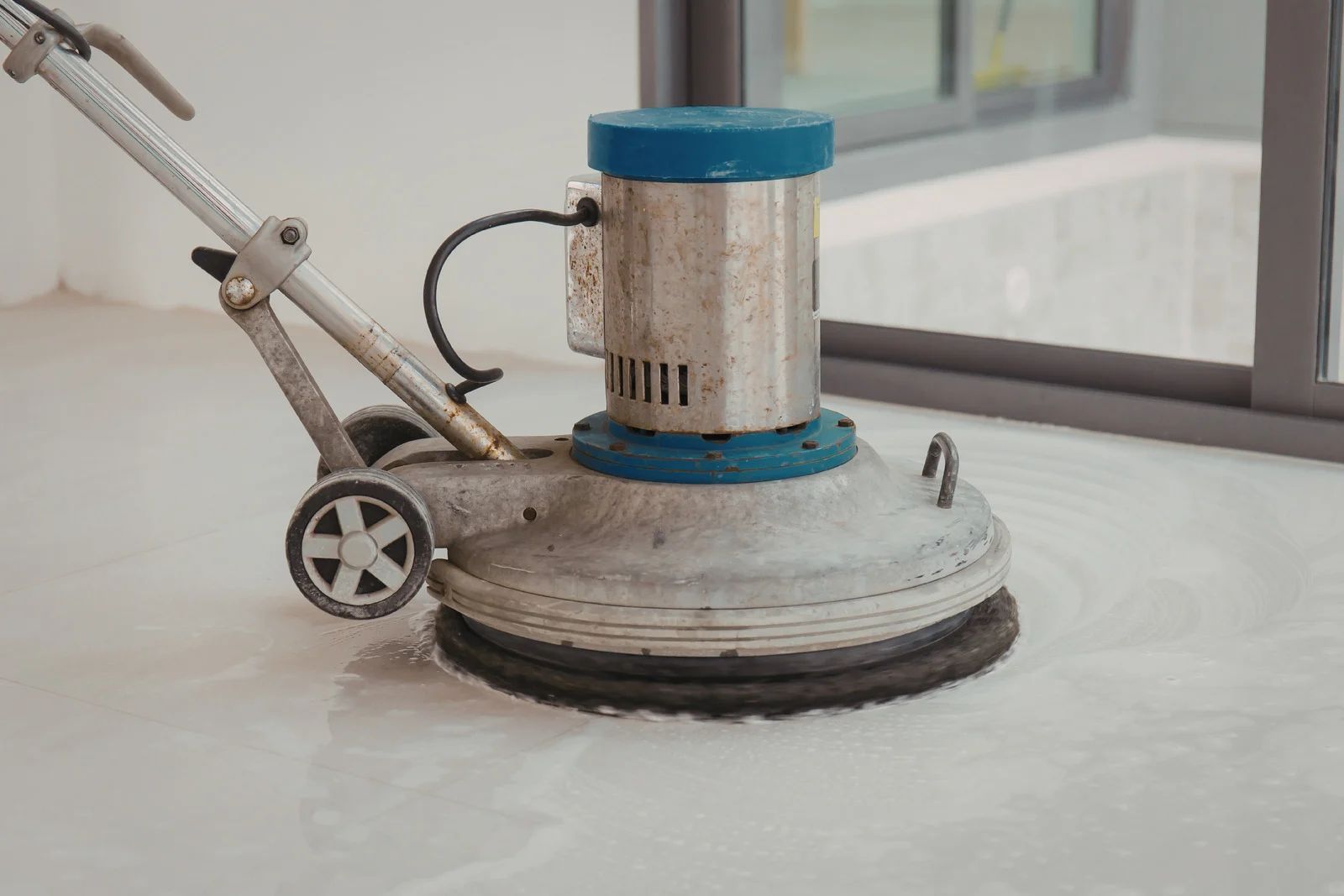
A stripping solution breaks down and lifts every layer of old finish, and it is removed along with all the trapped dirt and yellowing, taking the tile back to a bare, clean surface. This is the step that actually solves the problem, because it eliminates the built-up layers rather than covering them.
Neutralize and prep
The bare floor is rinsed and neutralized so fresh finish can bond correctly. Skipping this is one reason DIY attempts fail, because new finish over residue does not adhere or level well.
Fresh coats of finish
Several thin, even coats of new floor finish go down, each allowed to dry properly. Thin and even is the goal, the opposite of the thick buildup that caused the problem, and it produces a smooth, clear, high-gloss surface that reflects light evenly.
Buff to finish
High-speed buffing brings the new finish to its full gloss and smooths the surface, leaving the clean, bright look the floor had when it was new.
Done correctly, the change is dramatic: the yellow is gone, the haze is gone, and the floor reflects light the way a well-kept commercial floor should. The difference is not subtle, because you have removed the actual cause rather than masking it.
Keeping It From Happening Again
Once a floor is stripped and re-coated, the goal is to keep it looking that way without sliding back into buildup. A sensible maintenance rhythm does that.
The key is balancing routine upkeep with periodic deep work. Daily dust mopping and damp mopping with a neutral cleaner keep grit off the finish so it does not scratch and dull. Regular buffing or burnishing maintains gloss between major services. And a periodic scrub-and-recoat, removing a top layer and adding a fresh one, refreshes the finish without letting it pile up. The piece people skip is the full strip, which should happen on a schedule rather than only when the floor already looks bad. Stripping before the buildup gets out of hand is what prevents the dull, yellow stage from returning. In a high-traffic commercial space, how often that is needed depends on the foot traffic, but building it into a maintenance plan is what keeps floors consistently bright.
The thing to avoid is the endless re-coat cycle, adding finish year after year without ever stripping. That is precisely what creates the thick, ambered buildup in the first place, so a good maintenance plan schedules the strip rather than postponing it indefinitely.
Frequently Asked Questions
Why is my VCT floor yellow even though I clean it constantly?
Because the yellow is in the built-up floor finish, not on the surface. Layers of old wax amber as they age and trap dirt between coats, so cleaning the top does nothing for discoloration that lives underneath. Only stripping the old finish removes it.
Will buffing fix a dull, hazy VCT floor?
Not if the dullness is from buildup. Buffing shines good finish, but on thick, yellowed, dirt-trapping layers it only polishes the problem while the underlying haze and color remain. The floor needs to be stripped and re-coated, after which buffing restores full gloss.
Can I just add another coat of wax to brighten it?
That usually makes it worse. A new coat over old buildup adds another layer to the thickness and deepens the yellow. Fresh finish only delivers a clean, clear look when it goes onto a properly stripped floor, not on top of years of accumulation.
How can I tell if it's buildup or just dirty tile?
Compare the open, traveled floor to a protected spot like under a desk or behind a door. If those hidden areas look noticeably brighter and less yellow, you're seeing ambered finish in the traffic lanes rather than dirty or worn tile.
How often should commercial VCT be stripped and re-waxed?
It depends on traffic, but most commercial floors benefit from a full strip and re-coat on a regular schedule, often somewhere in the range of every six to twelve months, with buffing and scrub-and-recoat in between. The point is to strip on a plan rather than waiting until the floor already looks dull.
Is the yellowing permanent, or can the floor be saved?
In almost all cases the floor can be fully restored. The yellowing is in the finish, not the tile, so stripping it away and applying fresh coats brings back the original bright, glossy surface. It's rare that healthy VCT can't be brought back this way.
Bringing the Shine Back for Good
A dull, yellow VCT floor is one of those problems that feels like it should respond to harder cleaning and never does, because the cause is hidden in layers of old finish rather than on the surface. Once you see it that way, the fix is clear: strip the buildup off, lay down fresh coats, and then maintain it on a rhythm that includes the occasional full strip. Do that, and the floor that has been dragging down the look of your space goes back to making a strong first impression.
Bring a dull, yellowed floor back to a clean shine — When mopping and buffing stop working, the floor is telling you the old finish has to come off, and that takes proper stripping, re-coating, and a maintenance plan that prevents the buildup from returning. For over 20 years, JoCo Office & Floor Cleaning LLC restores tired VCT and hard floors for offices across the Clayton, Raleigh, and Smithfield area with professional
VCT floor stripping and waxing, taking them back to bare tile and rebuilding a smooth, high-gloss finish. Reach out to schedule a floor assessment and get a space that looks cared for again.